

In my experience as a registered chiropractor in Hong Kong, daily stretching is not simply about making your body feel looser — it is a scientifically grounded spinal care habit. From spinal balance to intervertebral disc nutrition, the impact of daily movement on spinal health is far greater than most people realise.
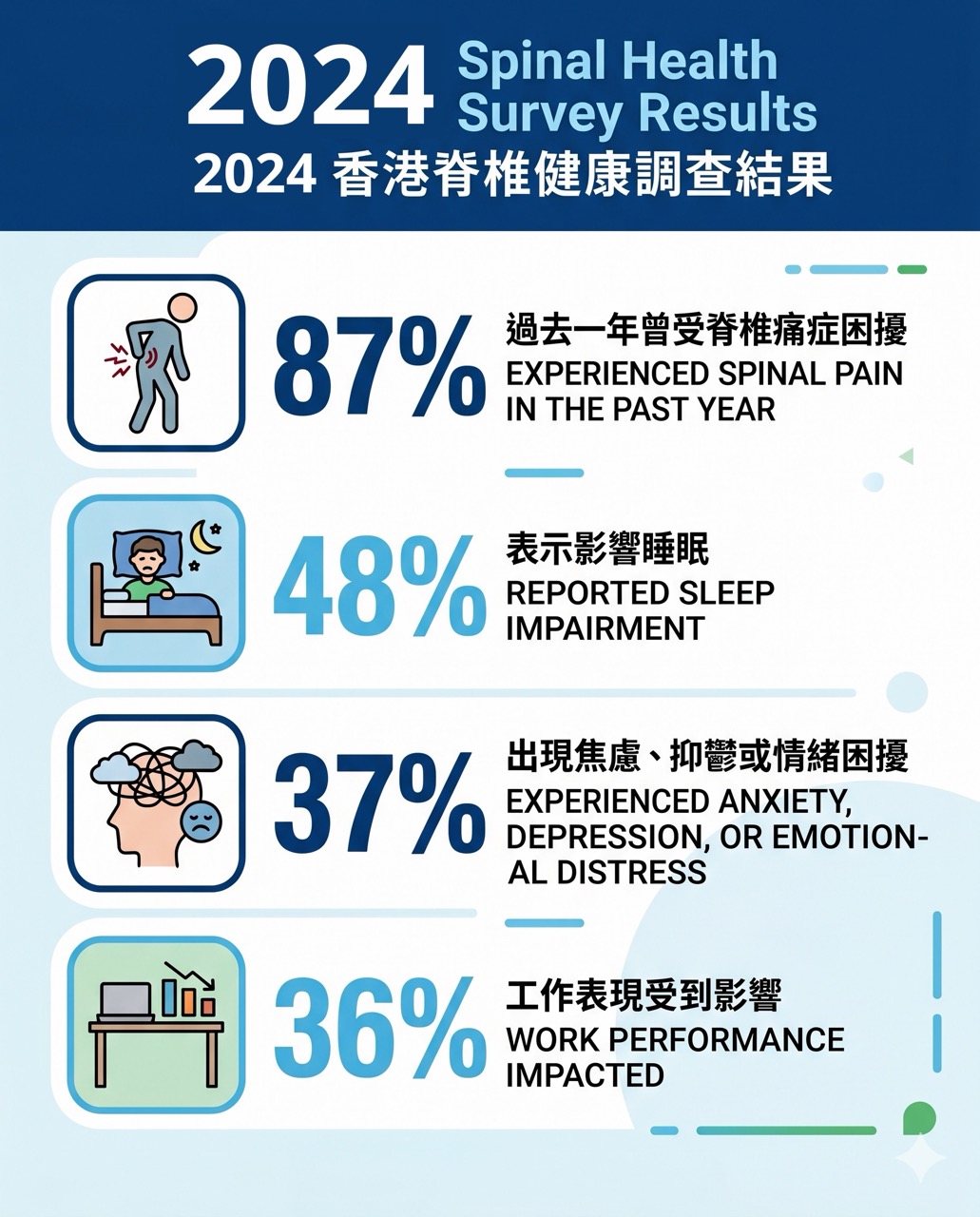
Spinal Balance: It's Not Just About Bones — It's About How Everything Works Together
A healthy spine isn't simply a matter of having "strong enough bones." The real key lies in whether the muscles and skeletal structures can maintain proper balance with one another. Think of your spine as a high-rise building: if the load-bearing columns are unevenly stressed over time and begin to tilt, structural problems will inevitably follow. The same principle applies to the human body. When certain muscle groups remain persistently tight, or when the body is held in an unnatural posture for extended periods, the spine comes under continuous strain — and over time, spinal alignment can gradually shift away from its natural position. This is an extremely common scenario in Hong Kong. Sitting in front of a computer for hours on end, looking down at a phone for much of the day, living and working in a way that offers very little physical movement — all of this keeps the body locked in a compressed, rigid state. Muscles grow tighter, and the load on the spine increases. In my practice, I often point out that stretching isn't just about getting a momentary release. It's about helping the body gradually return to a more natural state of balance, so that the spine and surrounding tissues are no longer under constant, excessive tension.The Intervertebral Disc Needs Movement to Stay Nourished — Less Activity Means Faster Decline
Unlike most tissues in the body, intervertebral discs have no direct blood supply. They cannot receive nutrients the way other structures do — through the bloodstream. Instead, they depend on the mechanical movement of the spine itself: the repeated compression and decompression, flexion and extension of everyday movement, which helps drive nutrient exchange into the disc. When you sit still for too long, this exchange process slows down. The disc receives less nourishment, loses resilience, and becomes more susceptible to degeneration and discomfort. This is why so many of my patients wonder: "I haven't been doing anything strenuous — so why does my lower back feel so worn out?" The answer, more often than not, isn't overexertion. It's undermovement. Intervertebral discs depend on activity to stay in good condition. Leave them idle for too long, and they gradually lose their natural elasticity. This is precisely why I always emphasise that daily stretching and gentle movement aren't bonus care for your spine — they're foundational.Stretching vs. Not Stretching: The Difference Shows Up in How You Feel Every Day
The comparison is straightforward: people who stretch regularly tend to maintain greater ease of movement in daily life. Those who don't stretch tend to accumulate tightness and stiffness over time. For the spine, the difference rarely announces itself in a single dramatic moment — it builds gradually, and you feel it in the small things: turning to look over your shoulder, bending down, getting up after sitting for a while.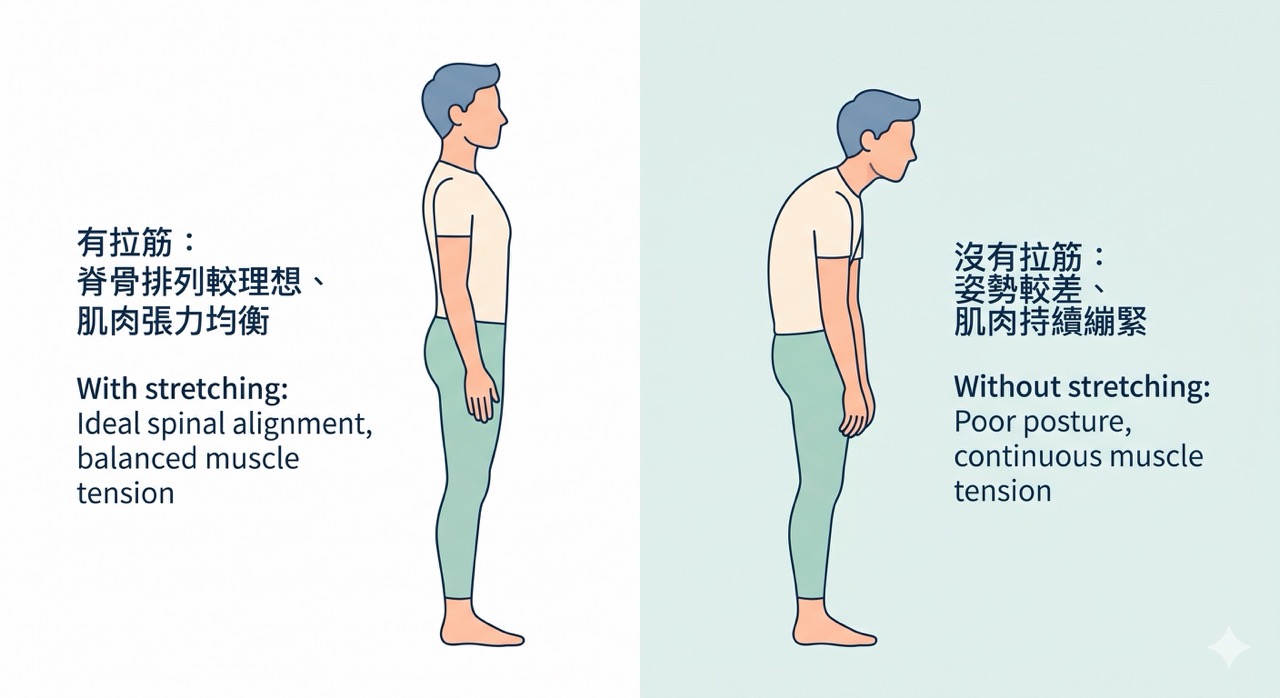
| Category | ✅ With Regular Stretching | ❌ Without a Stretching Habit |
|---|---|---|
| Muscle Condition | More relaxed; tension distributed more evenly | More prone to chronic tightness, pulling on the spine |
| Disc Condition | Supports nutrient exchange; helps maintain disc resilience | Reduced movement slows nutrient exchange; greater risk of degeneration |
| Morning Feel | Body mobilises easily; movement feels natural and fluid | Body tends to feel stiff; takes longer to "warm up" |
| After Prolonged Sitting | Less noticeable tension around the spine when standing up | Lower back more prone to stiffness and aching after sitting |
| Spinal Care Outcomes | More supportive of maintaining a better state following professional care | More likely to return repeatedly to a tight, uncomfortable baseline |
Frequently Asked Questions
Does daily stretching actually help spinal health?
Why are Hong Kongers particularly prone to spinal problems?
Can stretching improve intervertebral disc degeneration?
At what age should you start taking spinal health seriously?
Coming Up Next: What Actually Happens Inside Your Body When You Stretch?
Spinal balance and intervertebral disc nourishment are just two of the ways that stretching supports your spine. If you want to go deeper — to understand what's actually happening inside your body during a stretch, how muscles receive signals, how fascia remodels, and what changes even at the cellular level — I'll be covering all of that in the next article.If you've been experiencing persistent neck tension, back pain, lower back fatigue, or significant discomfort after prolonged sitting, your body may already be sending you signals worth paying attention to. Stretching is an important part of daily spinal maintenance — but if discomfort continues, a professional assessment by a registered chiropractor is the right next step to identify the true source of the problem and determine the most appropriate course of action.
Follow me on Instagram and Facebook for more spinal health insights.