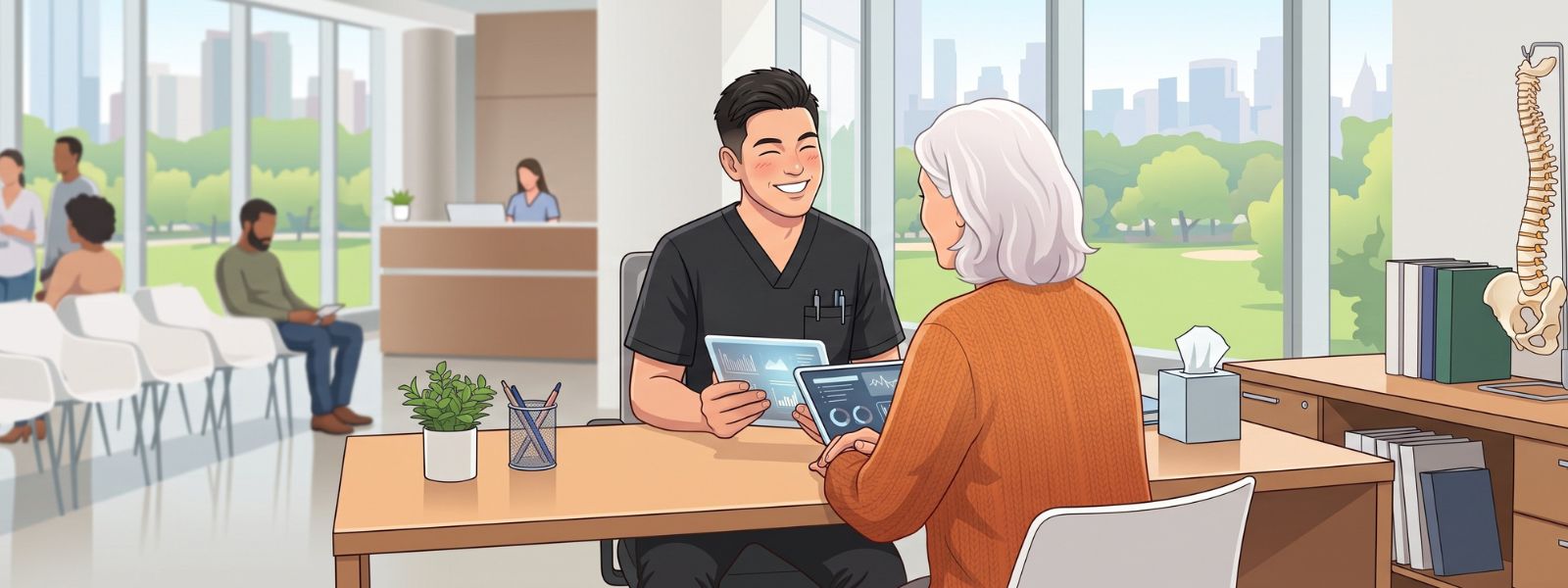
How Can You Make the Most of Your Elderly Health Care Voucher?

For many elderly people in Hong Kong, the Elderly Health Care Voucher can feel a bit like money tucked away in a savings account that nobody wants to touch. The government tops it up every year, the balance keeps growing, and eventually it hits the cap — quietly wasting resources that were meant to protect their health all along. The scheme was never designed to be a one-off sum you save for "a rainy day" or a major illness. Its real purpose is to encourage elderly residents to make regular use of private primary healthcare services, so that preventive check-ups and timely treatment can help them stay well for longer. In this article, I want to walk elderly patients and their caregivers through everything about the Elderly Health Care Voucher Scheme in the simplest way possible — from who qualifies, to what it covers, to the accumulation cap, and finally, how to actually put it to good use instead of letting it sit idle.
 

1. What Is the Elderly Health Care Voucher Scheme?

The Health Care Voucher, officially known as the Elderly Health Care Voucher Scheme, is an electronic subsidy provided by the Hong Kong Government to help elderly residents access private primary healthcare services. Its aim is to ease the financial burden of preventive, curative and rehabilitative care. The scheme has been running electronically since it launched in 2009, so there is no physical paper voucher to collect — the amount is simply credited straight into a personal voucher account. In short, the Health Care Voucher allows elderly residents to pay for private primary healthcare services according to their own health needs, and to freely choose the private healthcare professional they wish to see — including Medicine Practitioners, Chinese Medicine Practitioners, Dentists, and Chiropractors — without having to queue for public healthcare services every time.

2. Who Is Eligible for the Health Care Voucher?

According to the official Elderly Health Care Voucher Scheme website, eligible individuals must meet the following conditions:
  • Be aged 65 or above;
  • Hold a valid Hong Kong Identity Card, or a Certificate of Exemption issued by the Immigration Department;
  • The exception being where the individual's Hong Kong Identity Card was issued on the basis of a permission to land or remain in Hong Kong that has since expired or is no longer valid.
It is worth noting that there is no need to register or apply in advance for this scheme. As long as an elderly person meets the age and identification requirements, the voucher is issued automatically, and a personal account is set up on their behalf by the healthcare provider (such as a clinic) the first time they use it.

3. How Much Is Issued Each Year, and What Is the Accumulation Cap?

Every eligible elderly person currently receives HK$2,000 in vouchers each year, automatically credited to their personal account on 1 January. Unused amounts do not expire — they can be carried forward and accumulated indefinitely into future years. However, each account is subject to an accumulation cap of HK$8,000. In other words, if an elderly person rarely uses their vouchers and simply lets the balance build up, once the account reaches the cap, any newly issued amount that year cannot be credited in full, since it would exceed the limit. In addition, the government has run the Elderly Health Care Voucher Pilot Reward Scheme since 2024, encouraging elderly residents to use their vouchers for preventive care on an ongoing basis. If an elderly person uses at least HK$1,000 worth of vouchers on designated primary healthcare services within the same year, they can receive an additional bonus of up to HK$500 in vouchers per year. This pilot scheme has been extended until 31 December 2028.

4. What Services Can the Health Care Voucher Be Used For?

The Health Care Voucher's coverage is fairly broad, extending to preventive, curative and rehabilitative private primary healthcare services. According to official information, the following categories of healthcare professionals registered in Hong Kong may enrol in the scheme and accept voucher payments:
  • Medicine Practitioners, registered Chinese Medicine Practitioners, and Dentists;
  • Chiropractors, registered nurses, and enrolled nurses;
  • Physiotherapists and occupational therapists (subject to existing referral arrangements);
  • Radiographers and medical laboratory technologists (subject to existing referral arrangements);
  • Optometrists registered under Part I of the register;
  • Audiologists, clinical psychologists, dietitians, and speech therapists (must be registered with a recognised professional healthcare body).
It is important to note that the Health Care Voucher cannot be used for hospitalisation, healthcare services requiring prepayment, or day surgery procedures, among others. Before seeking treatment, elderly patients and caregivers are advised to check directly with the healthcare provider whether they accept voucher payments and whether the specific service falls within the scheme's coverage. A quota applies to optometry services: Since 2019, voucher use for optometry services (such as eye examinations and spectacle fitting) has been subject to a quota, capped at HK$2,000 every two years. This is meant to ensure that while elderly people can still benefit from optometry services, they retain enough balance for other primary healthcare needs.

5. How Does the Health Care Voucher Actually Work?

Using the Health Care Voucher is actually quite straightforward. Elderly patients and caregivers just need to keep the following steps in mind:
  1. The elderly person must receive the healthcare service in person from the provider before the Health Care Voucher can be used to pay for it;
  2. Present a valid Hong Kong Identity Card, or a Certificate of Exemption, to the registered healthcare provider and indicate that you wish to use the Health Care Voucher;
  3. If this is the first time using the Health Care Voucher, the healthcare provider will set up a personal voucher account on the spot, at no extra charge;
  4. The elderly person needs to provide a mobile phone number capable of receiving text messages (a family member's or caregiver's number can be used instead) in order to receive deduction notifications;
  5. The elderly person confirms the transaction using a smart identity card reader (if this is not possible due to special circumstances, a paper consent form can be signed instead);
  6. The healthcare provider will print a "Voucher Usage Record" for the elderly person to keep, showing the balance before deduction, the amount deducted, and the remaining balance.
Caregivers can help keep these usage records safe, and can also check the account balance anytime through the eHealth mobile app, or by calling the Voucher Enquiry Hotline at 2838 0511 — making it easier to plan voucher use in advance.

6. How Can You Make Better Use of the Health Care Voucher Instead of Just Saving It?

Out of habit or a sense of thrift, many elderly people feel they should "save the voucher for when a serious illness strikes." Year after year, the balance simply accumulates, and it often ends up being wasted once it hits the HK$8,000 cap. In reality, the Health Care Voucher was designed precisely to encourage regular preventive check-ups and timely treatment, rather than waiting until a problem has already worsened before seeking care. For those who spend long hours on computers and mobile phones, the degeneration of the cervical and lumbar spine tends to accelerate with age, often faster than expected. Arranging regular health check-ups, spinal assessments, or physiotherapy as part of primary healthcare can help you stay aware of changes in your body sooner — and this is one professional option worth considering. Rather than letting the Health Care Voucher sit quietly in an account gathering dust, turning it into part of a regular health management routine may be a more practical way to make it work for you.

7. How Can You Avoid Wasting the Health Care Voucher?

To avoid losing voucher value once the accumulation cap is reached, caregivers can help elderly family members regularly review their account balance and plan ahead for how to use it. Below is a summary of common scenarios and suggested approaches:
Common Health Care Voucher scenarios and suggested approaches
Scenario Possible Issue Suggested Approach
Health Care Voucher account balance is close to the HK$8,000 cap The new amount issued that year may not be credited in full, as it would exceed the cap Plan ahead — for example, arrange a Chiropractic Body Check, physical or dental check-up
Elderly person rarely seeks treatment and vouchers sit unused Missed opportunities for regular preventive care Consider arranging at least one primary healthcare assessment per year, such as a spinal check-up or dental examination
Uncertainty about whether a provider accepts the Health Care Voucher Unable to use the Health Care Voucher on the spot during a visit Check the list of registered healthcare providers, or confirm with clinic staff, before the appointment
Heavy use of the Health Care Voucher on optometry services May exceed the HK$2,000 quota per two-year period Understand the quota arrangement and keep enough balance for other primary healthcare needs
Caregivers can also make use of the Spouse Account Linking arrangement — if one spouse's voucher balance has been used up, the other spouse's remaining balance can be used to pay for related services, giving the household more flexibility in how they use their combined voucher resources.

Conclusion: The Real Value of the Elderly Health Care Voucher Lies in Using It Wisely

The Elderly Health Care Voucher Scheme was never meant to be just another "government benefit" — it is really a gentle reminder for elderly residents to pay regular attention to their own health. Rather than letting it sit untouched in an account, why not turn it into part of your everyday health management? Whether that means a dental check-up, an optometry assessment, or a professional assessment of your spine and musculoskeletal system, these are all directions worth considering. As a side note, Ethica Health, located in Central, Hong Kong, is run by Dr. Ronan Chan, a Hong Kong Registered Chiropractor. Elderly patients can use their Health Care Voucher to pay for Chiropractic Body Check / treatment here as well. If you or someone you care for would like to learn more about this professional option within primary healthcare, you are welcome to visit our website for details or to book a consultation.

Frequently Asked Questions

Q1. Do I need to apply every year to receive the Health Care Voucher?

No. The Health Care Voucher is issued automatically and electronically. Eligible elderly residents receive HK$2,000 into their personal account every 1 January, with no need for prior registration or application, and no paper vouchers are issued.

Q2. Does the unused balance of the Health Care Voucher expire?

There is no expiry date. Unused amounts can be carried forward and accumulated year after year, but each account has a total accumulation cap of HK$8,000, beyond which additional amounts may not be credited.

Q3. Can the Health Care Voucher be used for chiropractic services?

Yes. According to the official list under the Elderly Health Care Voucher Scheme, Hong Kong Registered Chiropractors are among the eligible healthcare providers, and elderly patients can use their Health Care Voucher to pay for chiropractic assessments and related primary healthcare services.

Q4. Can a caregiver use the Health Care Voucher on behalf of an elderly person?

The elderly person must receive the healthcare service in person before the Health Care Voucher can be used. Caregivers may accompany them to appointments and help provide a contact number to receive deduction notifications, but the use of the voucher itself must be confirmed by the elderly person (or their guardian, under special circumstances).

Q5. Can the Health Care Voucher be used for hospitalisation?

No. The Health Care Voucher cannot be used for hospitalisation, healthcare services requiring prepayment, or day surgery procedures. It is intended mainly for private primary healthcare services.

Q6. Can a married couple share their Health Care Vouchers?

Yes. Couples can apply to link their voucher accounts, so that once one spouse's balance is used up, the other spouse's remaining balance can be used to pay for related services — giving the household more flexibility in how their combined resources are used.

Q7. How can I check the balance of my Health Care Voucher account?

Elderly residents and caregivers can check their account balance and usage history anytime through the eHealth mobile app, the Elderly Health Care Voucher Scheme website, or by calling the Voucher Enquiry Hotline at 2838 0511.

Q8. Are there restrictions on using the Health Care Voucher for optometry services?

Yes. Since 2019, Health Care Voucher use for optometry services has been subject to a quota, capped at HK$2,000 every two years. This is designed to allow elderly residents to benefit from optometry services while still retaining enough balance for other primary healthcare needs.
 

eHealth Hong Kong: How Shared Records Help Me Treat Patients Safer

Every week, I sit across from a patient who cannot fully answer a question that should be simple: "What treatment have you had before, and what are you currently taking?" It's rarely their fault. Many of them have seen several doctors over many years, and details slip. Some pull out a crumpled plastic bag of medicine bottles from three different clinics and shrug. Others simply say, "I think I had something done to my back a few years ago, but I can't remember what." When I don't have the full picture, the treatment plan I build is only as good as the information I'm given — and that's exactly the gap that Hong Kong's Electronic Health Record Sharing System, known as eHealth, is designed to close.

When Patients Can't Remember Their Own Medical History

A Familiar Scene in My Consultation Room

If you've ever accompanied a relative to a check-up, you'll recognise this scene: the doctor asks "what medications are you on?" and everyone in the room starts guessing. I see this constantly in my own practice. A patient tells me about back pain, but forgets to mention they're also seeing a cardiologist, taking blood thinners, or that an X-ray was done at a public hospital eight months ago. It's not a memory problem unique to Hong Kong — it happens everywhere people juggle multiple clinics — but in a city where many residents move between public hospitals, private specialists, and community clinics, the paper trail gets scattered fast.

Why Missing Information Increases Treatment Risk

For a chiropractor, incomplete information isn't just inconvenient — it can directly affect how safely and appropriately I can proceed. If I don't know a patient recently had spinal imaging, I might order a test that has already been done. If I don't know about certain medications or existing conditions, I have to be more conservative with my assessment, which can slow down how quickly I understand what's really going on. This is precisely the kind of "information gap" that eHealth was built to help address, by giving authorised healthcare providers a shared, more complete picture of a patient's health record .

What Is eHealth and What Does It Actually Share

A Free, Lifelong, Two-Way Health Record System

eHealth is a platform developed by the Hong Kong Government that builds free, lifelong electronic health records for members of the public, enabling two-way sharing of health information among public and private healthcare providers. Participation is voluntary, territory-wide, and patient-oriented — meaning the patient decides who can access their records, and every participant's data is stored in encrypted electronic format. In simple terms, it's a shared filing cabinet for your health history, one that follows you whether you're at a public hospital, a private clinic, or — in my case — receiving chiropractic care.

The 11 Types of Data Doctors Like Me Can Access

According to eHealth, there are currently 11 types of shareable data, including personal identification and demographic data, allergies and adverse drug reactions, and diagnosis, procedures and medication records. For a family caring for an elderly parent, this means a healthcare provider authorised by that parent can check what medicine was prescribed during a previous visit, without the family needing to recall it from memory . For a child's caregiver, an authorised provider can check immunisation records the same way . Access isn't unlimited, either — eHealth applies role-based access control, so different authorised healthcare professionals are granted different levels of access according to their clinical needs, and providers can only view records of patients under their care with consent, on a "need-to-know" basis.

How I Use eHealth Before and During an Assessment

Seeing Past Diagnoses, Medications and Reports First

When a patient has joined eHealth and authorised me as their healthcare provider, I can review relevant diagnosis, medication and test-report information before I even begin a physical assessment. This is a meaningfully different starting point compared to relying purely on what a patient remembers to tell me in a ten-minute conversation. Instead of piecing together fragments, I get a documented reference — which is exactly the kind of quick access to health records that eHealth was designed to provide for healthcare professionals .

Cutting Down Repeat Tests and Reducing Risk of Error

One of the stated benefits of eHealth for healthcare providers is that it helps reduce repeated tests and potential errors associated with paper records . In practice, this might look like avoiding sending a patient for another imaging scan that was already done recently elsewhere, simply because I didn't know it existed. Fewer unnecessary repeat tests also means less time, less cost, and less exposure for the patient — particularly relevant for patients for whom extra clinic visits are physically tiring.

Why This Matters Even More for Seniors and Persons with Disabilities

Juggling Several Specialists at the Same Time

Many of my elderly patients are not seeing just one doctor. It's common for someone in their seventies to be following up with a cardiologist, an orthopaedic surgeon, and a general practitioner, all in the same month. Each of those visits generates records — prescriptions, test results, diagnoses — that may sit in different systems if not shared. When those pieces are scattered, no single provider, including me, has the complete picture unless the patient (or their family) manually gathers and repeats it every time.

When Patients Can't Fully Describe Their Own Health Picture

For elderly patients and persons with disabilities in particular, verbally recounting a complete, accurate medical history during a single consultation can be genuinely difficult — whether due to memory, communication difficulties, or simply the sheer number of past treatments involved. This is where the gap I described at the start of this article becomes most consequential, and it is exactly the population that benefits most from a system where records don't rely solely on memory or verbal recall.

General Illustration: Assessment With and Without Shared Records
Aspect of Assessment Without Shared Records With eHealth Access
Reviewing medication history Relies on patient/family recall Authorised provider may access recorded medication data
Risk of repeat testing Higher, if past reports are unknown May be reduced, as noted in eHealth's stated benefits
Awareness of allergies/drug reactions Depends on what patient remembers to mention Recorded allergy and adverse drug reaction data may be available
Cross-specialist awareness Fragmented across separate providers Two-way sharing among authorised public and private providers

Bringing eHealth Into My Home Visits

A home visit is different from a clinic consultation. I don't have a filing cabinet of past clinic notes sitting behind me, and there usually isn't a second professional in the room to help fill in gaps. Preparation before I even step through the door matters more here than almost anywhere else, and this is where having access to shared records ahead of time becomes especially useful. Where a patient has joined eHealth and authorised access, I'm able to arrive with a more informed picture of their health background, rather than piecing everything together on the spot.

A New Chapter: Home Chiropractic Care for Seniors and Persons with Disabilities

Now Covering Hong Kong Island, Kowloon and the New Territories

I'm currently expanding my home chiropractic service for seniors aged 65 or above and persons with disabilities, now covering Hong Kong Island, Kowloon, and the New Territories (excluding Stanley, Tai Tam, Shek O, Lantau, and the Outlying Islands), with no house-call fee charged for eligible patients. This service was designed with exactly the population described throughout this article in mind — people for whom travelling to a clinic can be difficult, and whose health history often spans multiple specialists and providers.

How eHealth Helps This Service Run More Efficiently

For home visits specifically, having access to a patient's shared health records — where the patient has joined eHealth and authorised access — can make a real difference to how efficiently and thoroughly I'm able to conduct an assessment on-site, without needing to rely entirely on what the patient or a family member can recall in the moment.

The home visit service generally includes:

  • A spinal and postural assessment
  • Chiropractic treatment appropriate to the assessed condition
  • Guidance on posture and self-care at home

If you have a parent, relative, or someone under your care who may benefit from this kind of home-based professional assessment, you're welcome to reach out to learn more about the service and how it works.

Frequently Asked Questions

What is eHealth in Hong Kong?

eHealth is an electronic platform developed by the Hong Kong Government that builds free, lifelong health records for the public and enables two-way sharing of health information between public and private healthcare providers.

How does eHealth help my chiropractic assessment?

With patient authorisation, eHealth allows me to reference existing diagnosis, medication, and report information before an assessment, giving a more complete starting point than relying only on verbal recall .

Can eHealth reduce the need for repeated tests?

According to eHealth, one stated benefit for healthcare providers is a reduction in repeated tests and potential errors associated with paper-based records, which may help avoid unnecessary duplicate examinations .

Why is eHealth especially useful for seniors?

Seniors often see multiple specialists at once, and consolidating their records may help authorised providers, including chiropractors, access a fuller history without depending solely on memory .

Why is eHealth useful for persons with disabilities?

Persons with disabilities may face communication difficulties describing their full medical history verbally, so having authorised providers access recorded data may help reduce gaps in information .

Does joining eHealth cost anything for patients?

No. eHealth is described as a free, lifelong electronic health record system for members of the public, with participation on a voluntary basis.

How does eHealth support home chiropractic visits?

Reviewing available records beforehand, where authorised, allows more preparation ahead of an on-site assessment, which can support a more efficient and informed home visit.

How can I book a home chiropractic visit with Ronan?

Seniors aged 65 or above and persons with disabilities across Hong Kong Island, Kowloon, and the New Territories (excluding Stanley, Tai Tam, Shek O, Lantau, and the Outlying Islands) can enquire about the home chiropractic service, which currently has no house-call fee for eligible patients. You're welcome to get in touch to find out more.

Posted in FAQ

What Is a Chiropractic Body Check? A Hong Kong Chiropractor’s Guide

In my last article, I shared a case where a patient had been living with a discomfort that no one could quite explain — until a Chiropractic Body Check helped us understand what was actually going on. That case left many of you asking me a very fair question: what actually happens during this kind of assessment, and how does it uncover the root cause of a problem?

So today, I want to walk you through exactly that — what a Chiropractic Body Check involves, and who might benefit from having one.

A Stitch in Time Saves Nine

If there's one pattern I see again and again in my clinic, it's this: people wait. They feel a nagging stiffness in the neck after a long week of back-to-back Zoom calls, or a dull ache in the lower back that flares up after carrying groceries up the stairs from the wet market — and they brush it off. "It'll go away on its own," they tell themselves. Weeks turn into months. What started as a minor niggle slowly becomes something that affects how they sit at their desk, how they sleep, even how they walk.

As the old saying goes, a stitch in time saves nine — treating a small issue early is far easier than untangling a bigger one later. The longer you wait, the more layers of compensation your body builds around the original issue, and the more time, effort, and cost it eventually takes to unwind. Early attention isn't about overreacting to every twinge; it's about giving your body the best chance to recover quickly, before a simple issue turns into a complicated one.bbc+1

This is where a Chiropractic Body Check comes in — not as a reaction to a crisis, but as a structured way to understand what's really happening in your body before things escalate.

So What Exactly Is a Chiropractic Body Check?

Think of it less like a quick check-up and more like a full vehicle inspection at a garage. If your car's engine light comes on, a good mechanic doesn't just top up the oil and send you off — they check the engine, the suspension, the brakes, and the electronics, because one warning light rarely tells the whole story. A Chiropractic Body Check works the same way: it's a systematic, evidence-based investigation into how your nervous and musculoskeletal systems are actually functioning, rather than simply chasing the spot where it hurts.

By looking at your body as a connected system rather than a single sore point, we're able to piece together the "why" behind your discomfort — not just the "where."

The Building Blocks of the Assessment

Each part of the assessment plays a distinct role, like different specialists on a team, each contributing a piece of the puzzle.

Health History and Consultation

This is where I listen — really listen — to your story. Much like a thorough interview before an insurance policy is issued, we talk through your daily habits, your desk setup, your stress levels, past injuries, and what you're hoping to achieve. This context often reveals the "why" behind symptoms that seem to come from nowhere.

Visual and Structural Assessment

Here, we observe your posture in three dimensions — how your body holds itself up against gravity. Many Hongkongers will recognise the classic "phone-neck" look from hours spent scrolling on the MTR, or one shoulder sitting lower than the other after years of carrying a heavy work bag on the same side. We're looking for structural imbalances like a tilted pelvis, rounded shoulders, or uneven hips, which place uneven wear and tear on the joints over time.

Palpation

This is precise, hands-on touch — feeling the soft tissues and joints of your spine and limbs, much like an experienced tea taster judges the quality of leaves by feel rather than sight alone. Through palpation, we can locate areas of muscle guarding, tissue inflammation, and restricted joint movement.

Range of Motion

We measure how well your joints actually move — similar to testing whether a door hinge swings smoothly or catches and creaks. This evaluation reveals localized stiffness, asymmetrical movement patterns, and tracking errors in the spine and limbs.

Orthopaedic and Neurological Testing

These are targeted diagnostic tests that isolate specific tissues. Orthopaedic tests check the integrity of ligaments, tendons, and spinal discs — think of it as checking the structural beams of a building. Neurological testing, covering reflexes, sensory mapping, and muscle strength, checks that the "wiring" between your brain and body is communicating without interference.

Functional Movement Screening

Here, we observe how your body moves as a complete system during active tasks like squatting or bending — similar to watching a badminton player's full swing rather than just their grip on the racket. This helps identify compensatory patterns, where one area of the body is working overtime to make up for weakness elsewhere.

Optional Imaging (X-Ray or MRI)

If the assessment reveals any clinical "red flags," or if deeper structural issues such as disc herniations or significant degeneration are suspected, imaging may be recommended as a next step, to help ensure that any care plan going forward is safe and appropriately targeted.

Assessment Components at a Glance

To make it easier to see how each part fits together, here's how I break down the purpose and insight of each component:

Purpose and possible findings of each Chiropractic Body Check component
Component Purpose What It Can Reveal
Health History and Consultation Understand daily habits, desk setup, stress, past injuries, and goals Context behind physical symptoms
Visual and Structural Assessment Analyse posture in three dimensions against gravity Structural imbalances like tilted pelvis, rounded shoulders, uneven hips
Palpation Hands-on assessment of soft tissue and joints Muscle guarding, tissue inflammation, restricted joint play
Range of Motion Measure how well joints move Localized stiffness, asymmetrical movement, tracking errors
Orthopaedic and Neurological Testing Isolate specific tissues and nerve pathways Ligament/tendon/disc integrity; reflex, sensory, and strength issues
Functional Movement Screening Observe the body as a whole system during active tasks Compensatory movement patterns
Optional Imaging (X-Ray/MRI) Investigate suspected "red flags" or deeper structural issues Disc herniations, severe degeneration

The information above is for general reference only and individual circumstances may vary. If discomfort persists, it is advisable to consult a professional chiropractor for a proper evaluation.

Who Should Consider a Chiropractic Body Check?

If you've been carrying a persistent ache that hasn't quite made sense, or you've noticed your body compensating in ways you can't fully explain — a stiff hip that seems to now be triggering knee discomfort, for example — this kind of comprehensive assessment is designed to help make sense of it. It's especially relevant for anyone dealing with long-standing or recurring discomfort, past injuries that never fully resolved, or simply anyone wanting a clearer picture of how their body is functioning before small issues develop into bigger ones.

Bringing the Pieces Together

By combining all of these puzzle pieces — history, structure, touch, movement, targeted testing, and imaging when needed — I'm not just treating a symptom. I'm building a personalized, functional roadmap designed to restore mobility, improve posture, and help you move through your day without being held back by pain.

That's the heart of what a Chiropractic Body Check is really about — understanding your body as a whole, so we can address problems at their root, not just where they happen to show up.

Frequently Asked Questions

What does a comprehensive chiropractic body check actually involve?

As I explain, it's a systematic, evidence-based investigation into how the nervous and musculoskeletal systems are functioning, combining consultation, structural analysis, palpation, range of motion testing, orthopaedic and neurological testing, functional movement screening, and imaging when needed.

What specific assessments are included, such as postural analysis, neurological testing, or range of motion evaluation?

The assessment includes a Visual and Structural Assessment (postural analysis), Orthopaedic and Neurological Testing (nerve and tissue function), and a dedicated Range of Motion evaluation, alongside health history, palpation, functional movement screening, and optional imaging.

What is the purpose of each component, and what problems can each one reveal?

Each component targets a different layer of the body — from context (history) to structure (posture), touch (palpation), movement (range of motion and functional screening), and internal integrity (orthopaedic/neurological tests and imaging) — together revealing everything from muscle guarding and joint stiffness to compensatory movement patterns and, where needed, deeper structural concerns like disc herniation.

Why go through a full assessment instead of just treating where it hurts?

Because a multi-layered approach helps pinpoint the exact root cause of discomfort, rather than simply chasing the location of pain — this is how I build a personalized, functional roadmap for each patient.