
Building a Daily Stretching Habit
In my previous article, I explained why stretching is so important for your spine and nervous system, especially in a busy city like Hong Kong where static postures quietly wear down your body over time. This time, I want to move from theory to practice and guide you through simple stretches you can use to build a realistic daily habit..
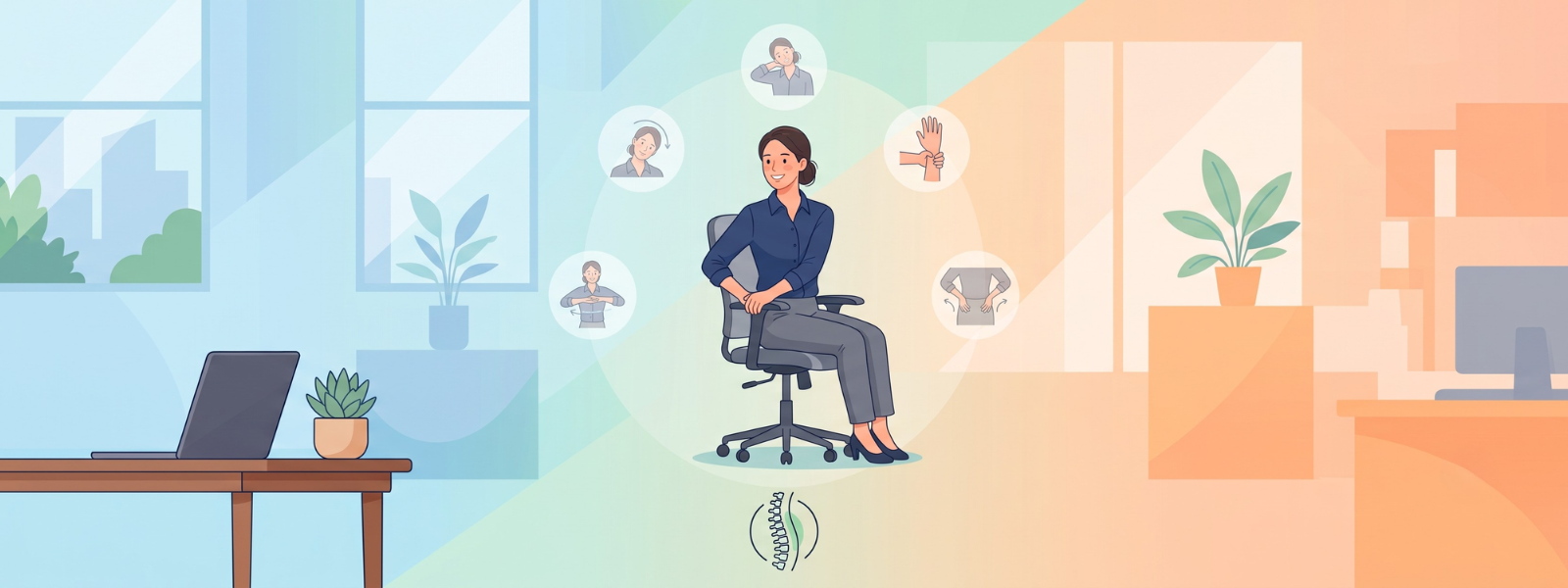
You don’t need a gym or specialized equipment to protect your spine. You can significantly improve your workplace ergonomics right from your desk in just five to ten minutes. For most office stretches, I recommend holding each position for 30 to 60 seconds – this gives your nervous system enough time to release its protective tension without causing muscle fatigue..
In this article, I will walk you through four targeted stretches:
- Side and back of your neck
- Chest and shoulders
- Hips and glutes
- Hamstrings and legs
These movements are designed to be practical for everyday life in Hong Kong, whether you are at your desk, in a meeting room, or sitting at home.
Simple Principles Before You Stretch
Before we go into each movement, I want you to keep three simple principles in mind:
- You should feel a gentle pulling sensation, not pain.
- Move into the stretch slowly and avoid bouncing.
- Breathe steadily and do not hold your breath while stretching.
Integrating these movements every 60 to 90 minutes helps your musculoskeletal system stay mobile throughout the day. Even short stretching breaks can make a noticeable difference when they are repeated consistently over time.
Stretch 1: Seated Levator Scapulae Stretch (Neck)
This first stretch focuses on the levator scapulae, a muscle that runs along the back and side of your neck and often becomes tight from looking down at screens or sitting with your head pushed forward.
How to do it:
- Sit tall in your chair, with your spine upright.
- Place one hand behind your head.
- Gently pull your chin down toward your armpit on the same side, until you feel a pull along the back side of your neck.
- Hold this position for 30 to 60 seconds, then slowly return to neutral and repeat on the other side if needed.
This stretch helps to combat neck tension that builds up during long periods of sitting and focusing on screens. When practiced regularly throughout the day, it can assist in reducing stiffness and discomfort in the upper neck region.
Stretch 2: Pec Stretch (Upper Chest and Shoulder Front)
The second stretch targets your pectoral muscles in the upper chest, which tend to become shortened when you spend hours typing, using a mouse, or leaning forward. Tight chest muscles contribute to rounded shoulders and a hunched posture.
How to do it:
- Find an upright surface, such as a wall or door frame.
- Place your forearms against the surface, with a 90-degree bend at your elbows.
- Your elbows should be roughly at shoulder height.
- Gently press your chest forward until you feel a stretch into your upper chest.
- Hold for 30 to 60 seconds while breathing steadily.
This pec stretch helps counteract the rounded, forward posture that comes from prolonged typing and device use. By opening up the front of the shoulders and chest, it supports a more neutral spinal position.
Stretch 3: Seated Figure Four (Hips and Glutes)
Addressing the lower body is critical for lower back pain relief, especially since tight legs and hips often contribute to pelvic and lower back discomfort. The seated figure four is an excellent beginner-friendly stretch for your hips and glutes.
How to do it:
- While sitting, place one ankle over the opposite knee, creating a “figure four” shape.
- Keep your back flat and avoid rounding your spine.
- Slowly lean forward from your hips until you feel a stretch along the side of your thigh and into your glutes.
- Hold for 30 to 60 seconds, then switch sides and repeat.
This stretch targets the muscles around the hip and glute region, which, when tight, can mimic sciatica-like symptoms. Regularly performing the seated figure four can help reduce tension in these areas and support more comfortable sitting.
Stretch 4: Seated Hamstring Extensions (Legs and Back of Thighs)
Long periods of sitting can cause your hamstrings to shorten and stiffen, which in turn can affect your pelvis and lower back mechanics. Seated hamstring extensions are a simple way to keep blood flowing and prevent this shortening.
How to do it:
- Sit upright in your chair with both feet flat on the floor.
- Straighten one leg out in front of you while remaining seated.
- Flex your toes toward your shin so you feel a gentle stretch along the back of your thigh.
- Hold for 30 to 60 seconds, then switch to the other leg.
Performing these hamstring extensions regularly helps maintain the length of the muscles along the back of your legs. It also supports circulation and reduces the impact that prolonged sitting has on your lower body.
Summary Table: Four Everyday Stretches
| Stretch name | Main area targeted | Key starting position | Suggested hold time | Everyday purpose |
|---|---|---|---|---|
| Seated Levator Scapulae | Back and side of the neck | Sitting tall, hand behind head. | 30–60 seconds | To reduce neck tension from forward head posture and screen use. |
| Pec Stretch | Upper chest and front of shoulders. | Forearms on upright surface at 90°. | 30–60 seconds | To counteract rounded shoulders and hunched typing posture. |
| Seated Figure Four | Hips and glutes, side of thighs. | Sitting, ankle crossed over opposite knee. | 30–60 seconds | To ease hip and glute tightness that can mimic sciatica symptoms. |
| Seated Hamstring Extensions | Hamstrings and back of legs. | Sitting, one leg straightened, toes flexed. | 30–60 seconds | To maintain hamstring length and support lower back comfort while sitting. |
FAQ
How often should I do these stretches during the day?
Integrating these movements every 60 to 90 minutes during your workday helps your musculoskeletal health remain mobile and reduces the impact of static loading on your spine.
Do I need any equipment or a gym to perform these stretches?
No. You don’t need a gym or specialized equipment to protect your spine; all four stretches can be performed right from your desk with only a chair and an upright surface like a wall or door frame.
How long should I hold each stretch?
For most office stretches, including the four described here, holding each position for 30 to 60 seconds allows your nervous system to release protective tension without causing muscle fatigue.
Are these stretches enough to manage all my spinal issues?
These stretches are a practical way to break up static postures, improve circulation, and reduce everyday tension on your spine and related muscles. By combining these simple desk stretches with regular chiropractic check-ups, you provide your body with structural support to cope with a demanding professional environment, though they are not a guarantee or standalone solution for every condition.

